Article
Delivering the Certainty of Custom Chimney and Exhaust Systems for Restaurants and Food Service
Restaurants and food service workers perform tirelessly through high-demand, pressure-filled conditions. Their equipment and facilities must do the same.
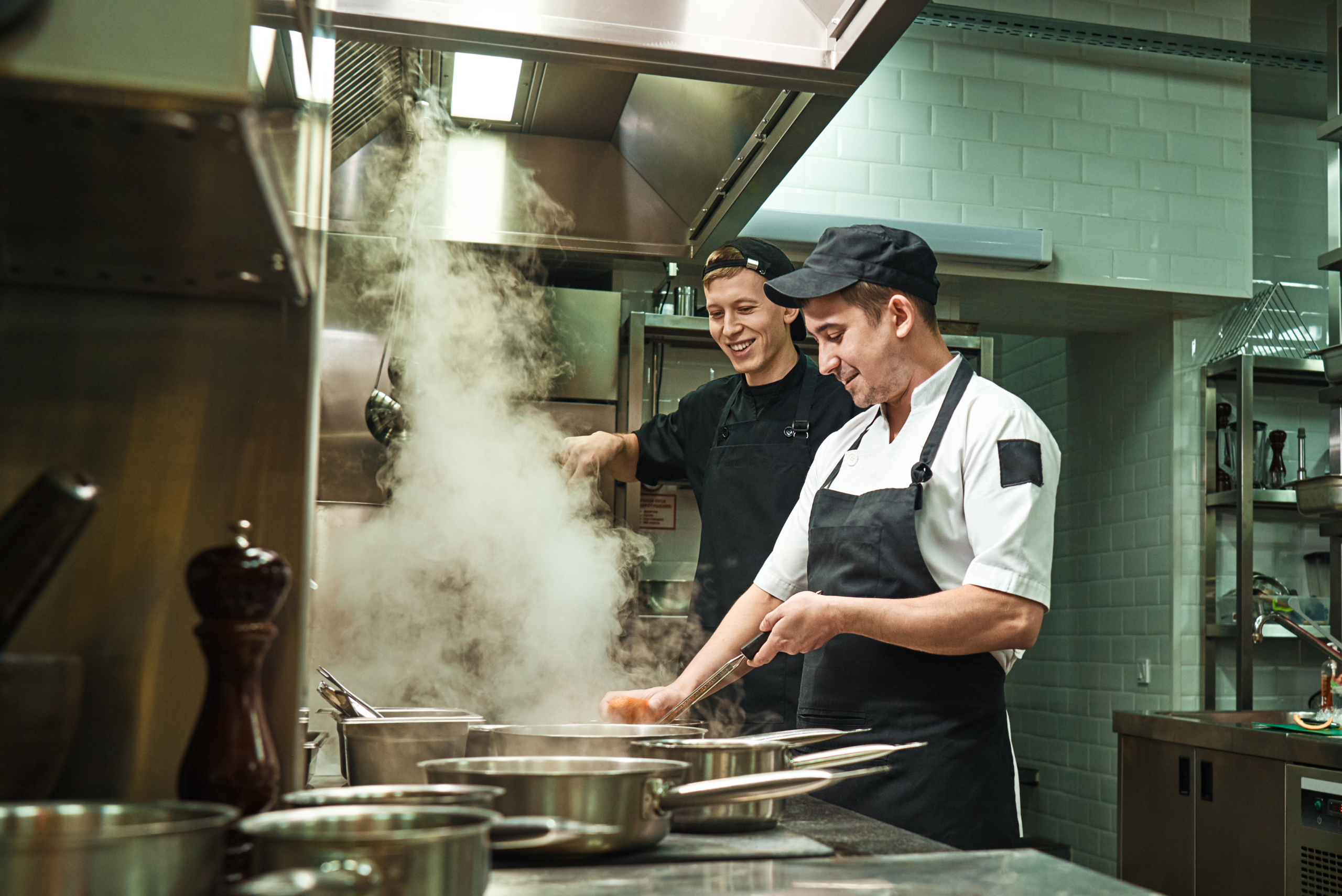
Commercial kitchens rely on exhaust systems for every hour they are in operation. These systems help remove heat, smoke, combustion byproducts, moisture and grease-laden vapors from their high-use cooking and cleaning areas. When properly designed, these systems support a safer kitchen, ensure stronger code compliance and enable easier maintenance. A kitchen’s exhaust design directly affects its people, productivity and the facility’s long-term performance.
WHY EXHAUST SYSTEMS MATTER IN RESTAURANTS
Commercial kitchens concentrate a lot of energy into a relatively small space. Cooking lines, prep areas and dishwashing zones must work together so heat, vapors and exhaust don’t create unsafe or inefficient conditions. Without the right exhaust strategy, kitchen environments can become harder to work in, harder to maintain and harder to keep compliant.
These systems do more than move air. They must be designed to handle the equipment being used, the exhaust stream temperature, the available routing space and the need for cleaning access. They also play a significant role in fire safety, ensuring facilities follow guidelines such as NFPA 96, which sets out requirements intended to reduce fire hazards in public and private commercial cooking operations. Another important guideline is the International Mechanical Code, which includes requirements for commercial kitchen hood ventilation ducts and exhaust equipment, as well as for factory-built commercial kitchen grease ducts listed and labeled in accordance with UL 1978.
HIGH-HEAT EQUIPMENT CREATES SERIOUS RISK WITHOUT PROPER VENTING
Restaurant and food service environments often include equipment that produces intense heat for extended periods. Pizza ovens, broilers, charbroilers, ranges, fryers and other cooking equipment can place heavy demands on exhaust systems. Industrial dishwashers also add heat and moisture that must be managed correctly.
When high-heat exhaust is not properly controlled, the risks can affect both people and the building.
For example, according to the National Restaurant Association, U.S. fire departments receive reports of more than 9,000 structure fires in eating and drinking establishments each year, resulting in more than 100 injuries and $175 million in direct property damage.
POOR VENTING CAN CREATE PROBLEMS BEYOND HEAT
Heat is only part of the challenge. Commercial kitchens produce grease-laden vapors, smoke, odors and moisture that can create maintenance, safety and performance issues when the exhaust system is not properly designed. Those concerns include the following:
CO
In some applications, combustion equipment can also create carbon monoxide risk if combustion byproducts are not properly exhausted.
OSHA warns that many people die from carbon monoxide poisoning, often in “semi-enclosed spaces without adequate ventilation.” The National Institute for Occupational Safety and Health (NIOSH) also notes that carbon monoxide can “rapidly accumulate, even in areas that appear to be well ventilated, and build up to dangerous or fatal concentrations within minutes.” For food service facilities using fuel-fired equipment, this reinforces the need for properly engineered exhaust pathways, adequate ventilation and systems designed for the specific appliance and application.
Grease
Grease is a particular concern because it can accumulate inside ductwork if systems are not designed, installed, accessed and maintained correctly. This is why commercial kitchen ventilation standards address not only airflow but also fire protection, construction, inspection and maintenance.
Cleaning
Poorly planned venting can also make routine cleaning more difficult. If access points are inconvenient, duct paths are overly complex, or system components are difficult to reach, maintenance teams may face unnecessary challenges. Over time, that can increase operational risk and make compliance harder to document.
Moisture
Moisture is a concern around dishwashing and high-volume kitchen operations. If exhaust systems do not effectively manage humid air, facilities may experience condensation, discomfort and potential impacts on surrounding materials.
WHY CUSTOM ENGINEERING IS SO VALUABLE IN FOOD SERVICE ENVIRONMENTS
No two restaurant or food service facilities have the same layout, equipment package or service volume. A standalone restaurant, hotel kitchen, stadium concession area, university dining facility and healthcare food service operation may all require different approaches.
Custom engineering helps address those differences before they become field problems. It allows the exhaust system to be designed around equipment type, exhaust temperature, clearance needs, cleaning access, structural conditions, roof penetrations and available space. That means fewer compromises and a clearer path to a system that performs as intended.
Only a company that specializes in customized venting solutions brings you the certainty of safety and performance.
WHY COMMERCIAL KITCHENS RELY ON THE CERTAINTY OF SCHEBLER
Restaurants and food service facilities need exhaust systems engineered for real operating conditions. Schebler is experienced in meeting those demands by building custom chimney and exhaust systems that:
- Prioritize safety and efficiency
- Ensure code compliance
- Help maintain smooth, reliable operations
- Provide easy installation and maintenance
Our solutions for commercial kitchens include the following products.
Double-wall round grease ducts that increase usable space with zero clearance while improving fire safety.
UL listed, lightweight chimney products that offer low clearances, lower initial costs and multiple insulation options.
Designed for critical generator exhaust applications where the certainty of zero leakage is required
For more information about chimney and exhaust systems for restaurants and food service operations, contact Schebler Chimney Systems today.

