Article
BUILDING HEATING APPLIANCE VENTING: THE SYSTEM YOU DON’T NOTICE. UNTIL IT FAILS.
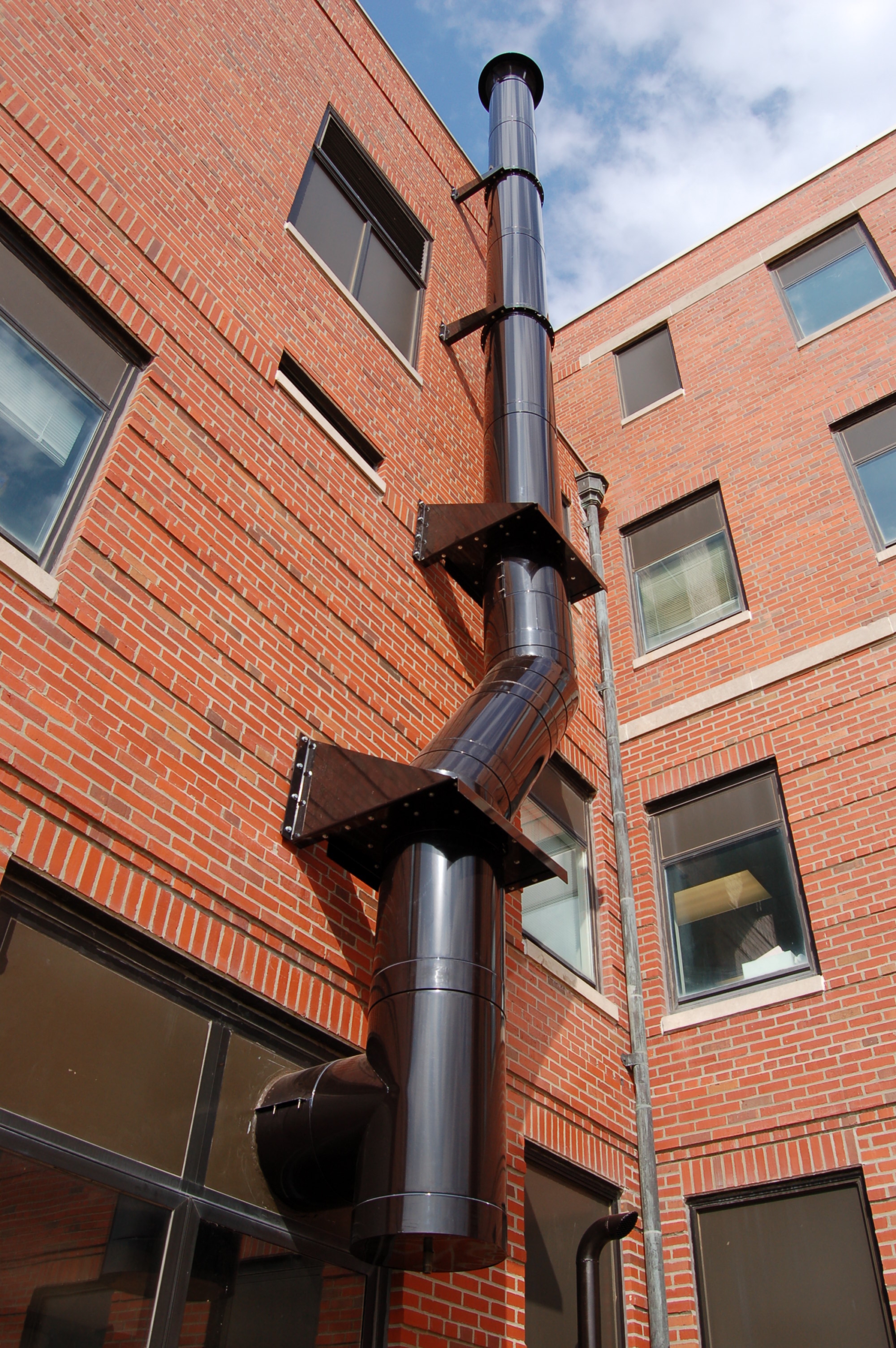
In a large commercial facility, boilers and commercial water heaters receive plenty of attention. They are essential to building operations and closely monitored by facility teams. The venting systems connected to them, however, because they often remain out of sight, are often largely ignored.
Yet building heating appliance venting performs a critical role in the overall heating system. It carries flue gases from boilers, water heaters and other fuel-burning equipment safely from the building.
When venting is properly designed, installed and maintained, it can operate largely unnoticed. When it is not, the consequences may reach far beyond the mechanical room.
BUILDING HEATING APPLIANCE VENTING SAFETY
Building heating appliance venting is more than a pipe connecting the boiler to the roof. It is an engineered system that must be compatible with the appliance, fuel, flue-gas conditions, building configuration and more. Adhering to the applicable requirements is critical to minimize the hazards associated with high temperatures and combustion gases.
Never assume an existing venting system is suitable for a new appliance. For example, the International Fuel Gas Code requires existing chimneys and vents used in new installations to be evaluated for proper sizing, draft, condensation, obstructions and deterioration. Forced- and induced-draft systems also have specific design and installation requirements.
WHAT CAN GO WRONG
A building heating appliance venting system must maintain a contained and unobstructed path from the equipment to the outdoors. If that path is damaged, blocked or incompatible with the appliance, several problems can follow.
Combustion Gases May Not Exit Properly
If a venting system cannot provide the required draft, it may not move combustion products outdoors as intended.
The specific risk depends on the appliance. Potential problems may include an insufficient draft, flue-gas spillage and leaking connections. Each of these problems can lead to unreliable appliance operations and, in some cases, damage equipment or create serious health and safety hazards.
Carbon Monoxide Can Create a Serious Hazard
If combustion products enter mechanical rooms or occupied areas, carbon monoxide is among the most serious potential hazards. OSHA warns that when inhaled, carbon monoxide “displaces oxygen in the blood and deprives the heart, brain and other vital organs of oxygen. Large amounts of CO can overcome you in minutes without warning — causing you to lose consciousness and suffocate.”
Because carbon monoxide cannot be detected by sight or smell, facility teams can’t simply rely on occupants to recognize a problem before exposure occurs. That makes sound system design and regular inspection especially important, particularly in heavily occupied facilities like apartments, hospitals, schools and arenas.
Condensation Can Lead to Corrosion
Combustion gases contain water vapor. Under certain operating conditions, the vapor can condense and become acidic when mixed with air and combustion gases. The resulting moisture can corrode some vent components and other materials.
This is especially relevant when modern high-efficiency equipment replaces older, hotter-running appliances. Lower flue-gas temperatures can create different condensation conditions, requiring venting materials and drainage provisions suitable for the new application. Over time, unmanaged condensate can contribute to material deterioration, damage around joints or drains and potential leakage.
The Appliance May Not Operate as Intended
The boiler and its venting system must work together within the appliance manufacturer’s required operating conditions. An improperly sized or configured system may interfere with dependable operation. Depending on the equipment and controls, the result could include poor performance or equipment failure.
The lesson? The correct venting solution can’t be selected based on appliance outlet size alone. The complete path, operating conditions and pressure must be evaluated.
WHY VENTING PROBLEMS REACH BEYOND THE MECHANICAL ROOM
In a commercial facility, a venting problem is rarely limited to a single piece of equipment. Loss of heat or hot water can affect residents, patients, students, employees, production processes and scheduled events. Emergency repairs may require equipment shutdowns or restricted access to portions of the building. Corrosive condensate may damage surrounding materials and equipment. In serious situations, combustion-gas leakage can create immediate health and safety concerns.
SCHEBLER CAN PROVIDE THE CERTAINTY OF SAFETY
Schebler helps you avoid these problems. Our team is experienced in creating heating appliance venting for boilers, commercial water heaters and hybrid heating systems. Each is prefabricated and built for your building configuration and project-specific requirements. That includes applications involving complex layouts and limited building space, where the venting is essential to maintain a safe and effective operation.
You may not notice building heating appliance venting when it works properly. But when something goes wrong, it can quickly demand everyone’s attention. Schebler can help ensure it is engineered for your equipment, building configuration and working conditions.
Contact Schebler Chimney Systems to discuss the venting requirements for your next project.

