Article
HOW GENERATOR EXHAUST SYSTEMS PROTECT PEOPLE, EQUIPMENT AND BACKUP POWER
Since they are so critical to a facility’s emergency power strategy, generators receive lots of attention. Even when utility power is interrupted, such as during a storm or other emergency event, essential operations must continue.
The exhaust systems connected to them, however, are easy to overlook.
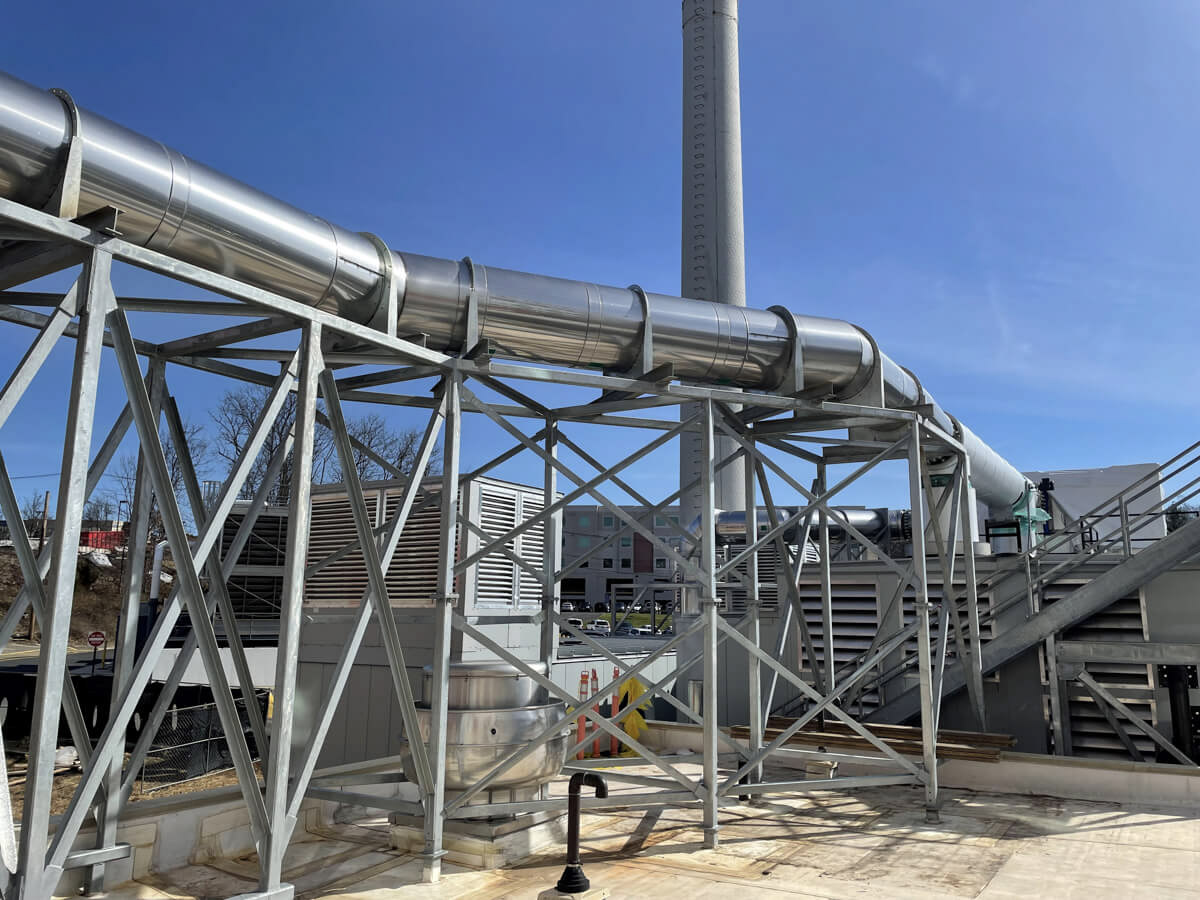
Yet these components are critical. When a generator runs, it produces more than electricity. It also produces hot combustion exhaust up to 1300˚F that must be safely contained, routed and discharged away from people and equipment. All that is the job of the generator exhaust system.
At the same time, the generator exhaust system must account for temperature, pressure, routing, clearance, expansion, support, applicable safety requirements and more. When that system is improperly designed, installed or maintained, the consequences can be substantial.
WHAT CAN GO WRONG
A generator exhaust system must have a safe, contained and unobstructed path from the generator to the outdoors. If that path is compromised, several problems can follow.
Combustion Gases May Not Exit Safely
If exhaust isn’t properly routed or contained, combustion byproducts may discharge in unwelcome areas. That can create concerns near mechanical rooms, roof areas, wall openings, air intakes or occupied spaces. The extent of that risk depends on many factors, including the system layout, discharge location, building configuration and operating conditions.
Carbon Monoxide Can Create a Serious Hazard
Carbon monoxide is one of the most serious risks associated with combustion exhaust. OSHA describes carbon monoxide as a poisonous, colorless, odorless and tasteless gas, and notes that one of the most common workplace sources of exposure is the internal combustion engine. OSHA also warns that large amounts of CO can overcome a person in minutes without warning.
A 2025 U.S. Consumer Product Safety Commission staff report, while focused on residential stationary generators, illustrates how generator exhaust can move farther than expected. In investigated incidents, CPSC staff reported that stationary generator exhaust traveled at least 25 feet from the enclosure and infiltrated adjacent homes at concentrations high enough to activate CO alarms. While commercial systems differ from residential installations, the takeaway is clear: exhaust location, routing, openings and airflow patterns matter.
High Temperatures Can Create Clearance Concerns
Generator exhaust systems handle high-temperature gases. If the system isn’t designed with the correct materials, insulation, clearances and supports, heat can affect nearby equipment and surrounding spaces. In tight mechanical rooms or complex building layouts, those concerns become even more important.
Pressure, Vibration and Thermal Expansion Can Stress the System
Generator exhaust isn’t static. As the generator operates, the system may be exposed to pressure, vibration and repeated heating and cooling cycles. If these issues aren’t accounted for, joints and components can become stressed over time. That stress can contribute to loosened connections, damaged supports, premature component wear and exhaust leakage. These failures can pose safety risks to surrounding areas.
Leaks Can Impact Safety and Performance
Leaks in a generator exhaust system can create risks along its route. This is especially important in hospitals, data centers, mixed-use buildings, schools, hotels, arenas and other facilities where exhaust may pass through or near sensitive or occupied areas.
Installation Quality Can Affect Long-Term Reliability
Generator exhaust systems must be coordinated with the rest of the building. Routing, supports, access, insulation, welding and field installation all influence how the system performs over time. If those details aren’t managed carefully, small installation issues can create larger reliability, maintenance or safety concerns. Some of these vulnerabilities may not appear until backup power is needed most.
SCHEBLER PROVIDES THE CERTAINTY OF GENERATOR EXHAUST SAFETY
Schebler’s factory-fabricated generator exhaust systems help facilities avoid these problems. Our UL listed products provide long-term performance and reliability and can offer leak-free safety. Many of our wide range of generator exhaust systems are built for tight spaces, add insulation for greater fire safety or meet other site-specific challenges. Our prefabricated approach also helps reduce the complications of traditional field-welded assemblies by supporting controlled manufacturing, quality control and efficient installation.
Generator exhaust may not be the first system people notice when backup power works. But when something goes wrong, it can quickly become the system everyone is watching. Contact Schebler Chimney Systems to discuss the generator exhaust requirements for your next project.

