Article
GREASE DUCTS SHOULD PROTECT YOUR BUILDING. WHAT HAPPENS WHEN THEY DON’T?
Cooking creates unavoidable fire risks. These risks exist almost everywhere a commercial kitchen is found, whether it’s a restaurant, a stadium, a school or a hospital. According to the U.S. Fire Administration, there were an estimated 33,300 nonresidential building cooking fires in 2023 alone, causing $50.3 million in property loss. And it’s getting worse. Over a ten-year span, nonresidential building cooking fires increased 13%.
That level of cooking fire risk underscores the importance of fire protection throughout commercial kitchens. And critical components of that protection are properly designed, installed and maintained grease duct systems. Grease ducts provide a contained path for heat and grease-laden vapors to vent outdoors. But grease accumulation, inadequate cleaning access, improper clearances and poor installation can all compromise the system, turning a safety component into a dangerous one.
GREASE DUCTS PLAY A CRITICAL ROLE IN FIRE SAFETY
Because grease ducts carry grease-laden vapors through the building, they are subject to specific construction, fire-safety and maintenance requirements. NFPA 96, the Standard for Ventilation Control and Fire Protection of Commercial Cooking Operations, addresses these exhaust and fire-protection requirements. The standard also includes rules for exhaust hoods, grease filters, fire-extinguishing equipment and more.
Inadequate grease duct systems threaten more than cooking equipment. Fire can damage ceilings, roofs and surrounding construction. Facilities may face emergency repairs, kitchen shutdowns, lost operating time and increased risk to employees, occupants and first responders.
WHAT CAN UNDERMINE THAT PROTECTION?
The following commercial kitchen risks increase fire risk.
Grease Accumulation
Grease-laden vapors can leave combustible deposits within the exhaust system over time. Because much of the ductwork is hidden, often above ceilings, that buildup may not be noticeable or even top of mind.
OSHA specifically identifies dirty ducts as a possible flue-fire hazard in restaurant environments.
Keeping ducts clean is an important part of fire management in commercial cooking environments and is often mandated by local laws and regulations. For example, the New York City Fire Department (FDNY) regulates commercial cooking exhaust-system cleaning and notes that enclosed ducts may require more frequent cleaning because grease buildup might not be obvious. Its guidance cites one-eighth inch (.125″) of grease build-up as requiring immediate cleaning.
Fire Travel
Some of the most serious consequences can occur after a fire enters a grease-laden exhaust system.
An incident documented in the FDNY training materials illustrates this. In a 1999 fire at the Tropicana Casino Hotel in Atlantic City, a cooking-oil fire penetrated the hood filter, traveled through the grease-laden exhaust system and reached the roof two floors above. The fire caused more than $350,000 in damage and several weeks of downtime.
Poor Access
A grease duct is difficult to maintain when it’s difficult to reach. If grease builds up in inaccessible portions of the system, the duct may no longer provide the protection expected from a properly maintained commercial cooking exhaust system.
Long runs, elbows and complicated routing can all create inspection and cleaning obstacles. As a result, accessibility must be considered during system design and installation, not after.
Clearances Matter
Tight fits bring greater risk, which is why grease ducts that must fit into crowded spaces have stricter fire-safety requirements.
The UL 1978 grease duct standard specifically covers factory-built grease ducts and grease duct assemblies designed for use with less than 18″ of clearance. To receive this certification, ducts must pass a series of tests involving extreme temperatures of nearly 2,000˚F, grease vapor and flame leakage, heavy joint loads, structural strength and more.
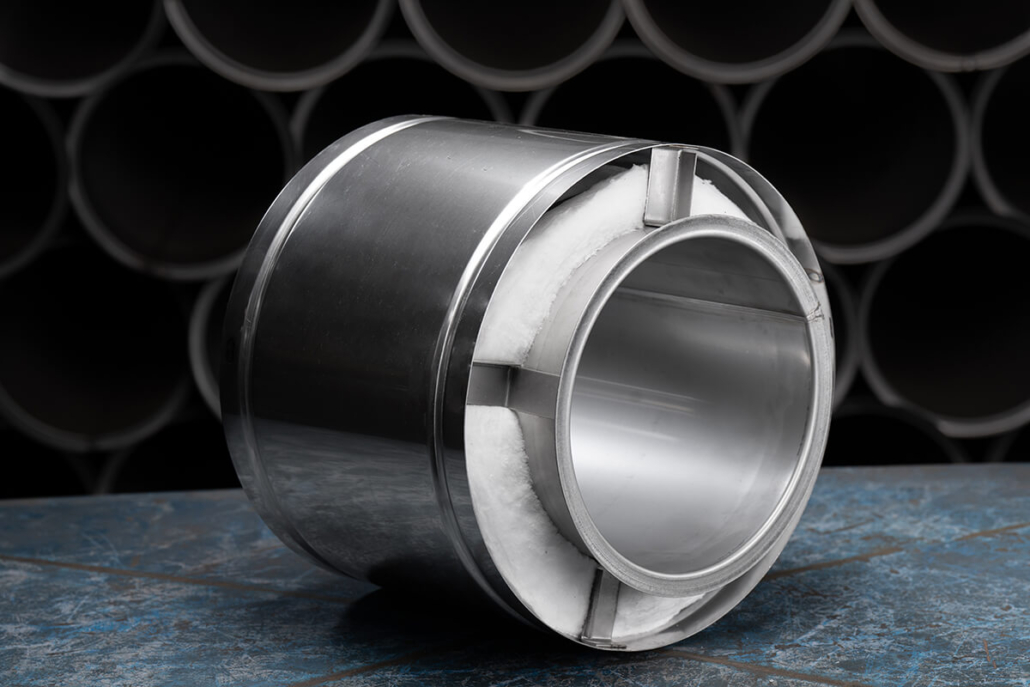
Schebler offers grease ducts designed specifically to provide excellent fire safety for space-constrained installations, including our FyreGuard® 3 and SlimVent® grease ducts.
Another relevant UL standard is UL 2221, which evaluates the fire resistance of grease duct enclosure assemblies, including their ability to contain an internal fire or resist an external fire.
Installation Quality
A grease duct must maintain a continuous, contained exhaust path. Poorly installed connections, fittings, penetrations and supports can all affect system performance.
Problems arising from inadequately executed installation may be hidden until after ceilings and surrounding building systems are complete. That is why design and installation quality matter just as much as selecting the right duct configuration.
SCHEBLER PROVIDES THE CERTAINTY OF GREASE DUCT SAFETY
Schebler helps address commercial cooking risks with high-quality, UL-listed grease duct systems. Each is designed around commercial kitchen fire-safety and code requirements, often eliminating the need for a separate fire-rated shaft where applicable. Our engineering team can account for routing, space limitations, cleaning access and other project-specific conditions before the system reaches the jobsite. And because they are prefabricated in our tightly controlled factory, you can be assured of high performance and durability.
Grease ducts are supposed to help protect the building. Schebler helps provide the certainty that the system is engineered, manufactured and installed with that responsibility in mind. Contact Schebler Chimney Systems for your next grease duct project.
